![[lost pyramids, NASA, satellite imaging]](archaeologist.gif)
lost pyramids NASA satellite imaging dr sarah parcak space archaeology
| parcak pyramid undiscovered 17 seventeen lost pyramids lost pyramids NASA satellite imaging dr sarah parcak space archaeology |
| Home > Space Archaeology index > Lost Pyramids - Egypt - Space Archaeology |
|
|||
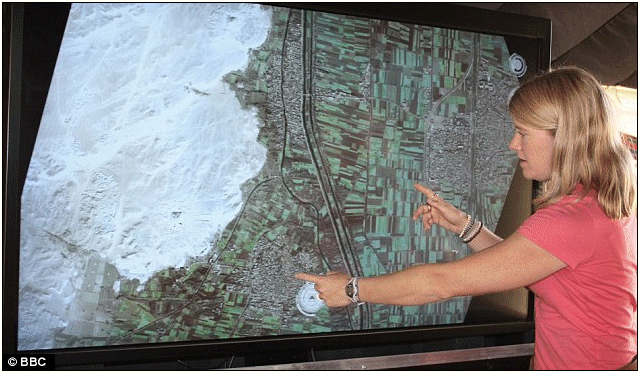
Dr Sarah Parcak pointing to an archaeological location on a display derived from space satellite imaging.
From the BBC documentary Egypt's Lost Cities, aired Monday 30 May, 2011
|
Seventeen 'possible' lost pyramids are among the buildings identified in a new BBC sponsored and NASA facilitated satellite imaging survey of Egypt.
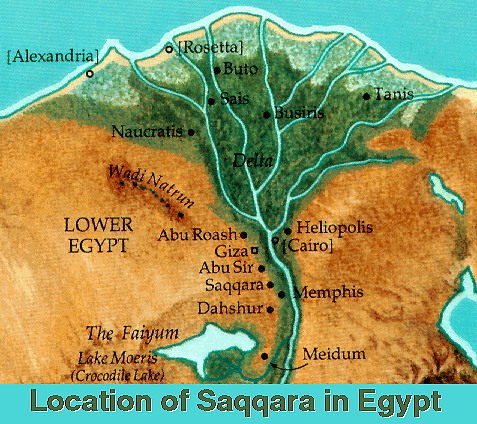
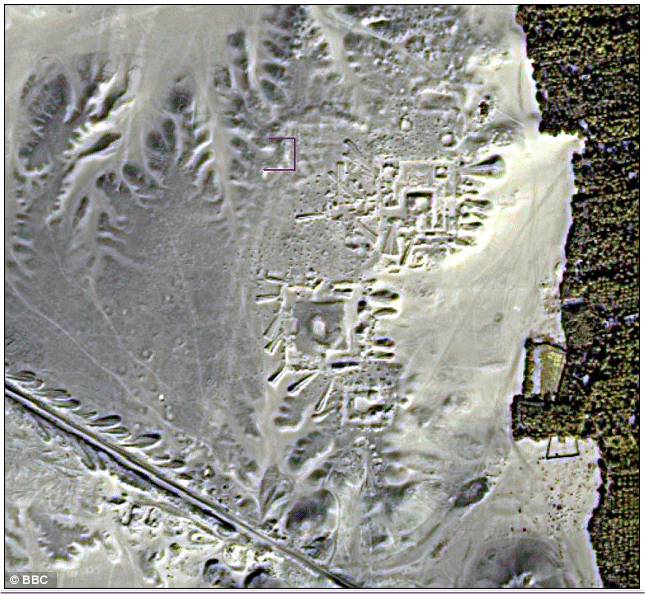
More than 1,000 tombs and 3,000 ancient settlements were also revealed by looking at infrared images which show up underground buildings. The work has been pioneered at the University of Alabama at Birmingham by US Egyptologist Dr Sarah Parcak. She says she was amazed at how much she and her team has found. "We were very intensely doing this research for over a year. I could see the data as it was emerging, but for me the "Aha!" moment was when I could step back and look at everything that we'd found and I couldn't believe we could locate so many sites all over Egypt. What Parcak's team actually found was 17 structures at Saqqara, close to ancient Memphis, that had a similar size, shape and orientation to other pyramids already discovered in the area. Initial excavations indicate that at least two of the structures are most likely pyramids, but Parcak warns, "we're not going to be able to say with a 100 per cent certainty that they are pyramids until they're excavated." Even then it seems that any lost pyramids could be either of rulers or of their wives. It is thought that the burial places of some two hundred Egyptian rulers have yet to be discovered. That would be the fun part for most archaeologists — getting dirty. "You can theorize as much as you want about what you think you're seeing, but until you get out there and dig," Parcak says, "you can't tell exactly what it is." "To excavate a pyramid is the dream of every archaeologist," she said. It seems that Saqqara pyramids were based on a 52 Metre by 52 Metre footprint. The possible lost pyramids correspond to this which in Ancient Egypt would have been 100 Cubits by 100 Cubits. The Cubit being based on the distance from finger-tip to elbow. The Egyptian authorities were not initially somewhat skeptical as to the value of her findings but after being told by Dr Parcak that she had seen two potential pyramids at an area of Saqqara (Sakkara), south of Cairo, they agreed to make test excavations, and they now believe it is one of the most important archaeological sites in Egypt. Saqqara was the burial ground for the ancient capital of Memphis and was already celebrated as the site where XIIIth dynasty pyramids, dating from 3000 years ago, had been found. |
|
||||||||||||||||||||||

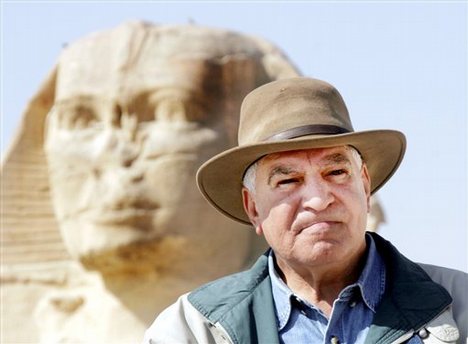
"To announce the discovery of 17 pyramids shows how people are not careful enough … You have to wait for the conclusion to come from excavation. You have to be very careful in interpreting satellite imagery."It could be suggested that the news was presented internationally in a less qualified form than Susan Parcak, and her team, might wish.
| ||||||
Return to start of
Lost Pyramids
Egypt - Space Archaeology page